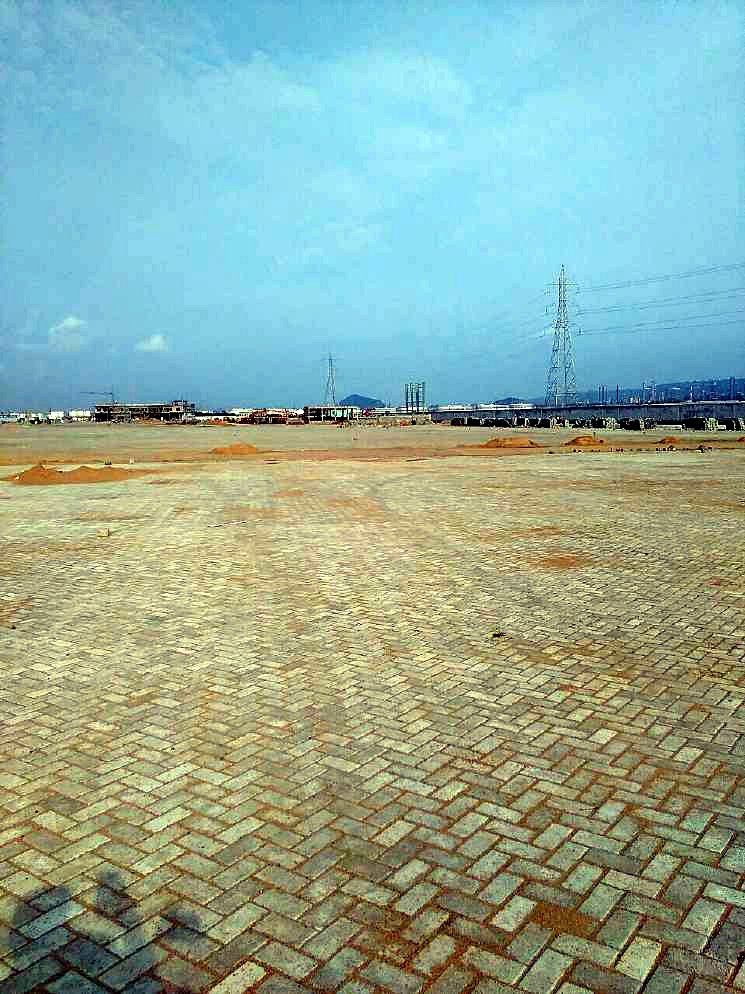
Jalna Dry Port, Maharashtra — heavy-duty paver pavement
The project
A dry port is a hard place for a pavement. Loaded trailers turn on the same spot all day, handling equipment brakes and pivots, and the surface never really gets a rest. For Jalna Dry Port the specification was clear: M-55 grade paver blocks, 120 mm thick, unipaver shape, to IS 15658.
We manufactured the blocks at the site itself, then laid them with our own crews. That combination matters more than people think. When the same organisation makes the block and lays it, there is nobody to blame if the pavement fails, which tends to keep everyone careful.
What we paid attention to
Everyone talks about block strength. Fewer people talk about joints. On this job the jointing sand was spread and brushed until the joints were fully packed, before any area was released to traffic. We filmed parts of this for LinkedIn because it is the step contractors most often rush.
A half-filled joint lets blocks rock under load. The edges start chipping, the surface goes wavy, and within a season you are looking at a repair job. A fully packed joint makes the blocks lock together and share the load, which is the whole point of an interlocking pavement.
Laying itself was done to line and level, with compaction, by laying teams who have been with us for years. We have always believed that experienced manpower for laying is as much a part of the product as the block.
How the pavement was proven
Before handover, the finished pavement was put through the vibratory roller test: a vibratory soil compactor run over the laid surface. It is a harsh test, deliberately so. Weak blocks or poorly bedded areas show themselves quickly as cracked or displaced units.
The pavement came through without cracking. Alongside the roller test, blocks were tested batch-wise during production, with records kept for the client's engineers.
One note of caution we give every client: the roller test is appropriate for high-grade heavy-duty pavements like this M-55 work. It should not be read as a general test for lower grades used in lighter applications.
From the site