Paver Block Pavement Repair & Re-laying
Paver pavements often develop sunken portions, opened edge restraints, vegetation in the joints and uneven surfaces — usually caused by faulty sub-base, poor drainage or poor workmanship, not by the blocks themselves. Owners live with these defects for years, not knowing they can be set right. We restore such pavements — including pavements originally executed by others.
- Your same blocks re-used — repair, not replacement
- Root cause fixed — sub-base, drainage & edge restraints
- Pavements laid by other contractors also taken up
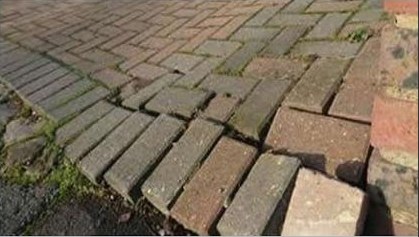
What we fix — as per IRC:SP:63
- Sunken & settled portions
- Blocks lifted, sub-base and bedding sand rectified, the same blocks re-laid
- Opened edge restraints
- Kerbs and edge restraints re-fixed so the pavement stays locked tight
- Joint vegetation & washed-out sand
- Joints cleaned and refilled with jointing sand
- Uneven, rough-riding surfaces
- Re-levelled to proper line, level and camber for drainage and ride quality
- Damaged or broken blocks
- Matching replacement blocks manufactured and merged with the existing pavement
- Reference practice
- IRC:SP:63 — bedding sand, jointing sand, edge restraints, laying pattern & maintenance for interlocking concrete block pavements
Every job starts with a site inspection — we identify the cause first, then quote the right repair.
Repair results — NMPA, Mangalore
Pavement repair works at Berth No. 5, 6 & 7 at NMPA, Mangalore, Karnataka: waterlogged and sunken areas were opened up, the sub-base rectified, and the pavement re-laid to level with joints sand-filled.
Before — waterlogged, ponded and sunken areas

Before — standing water across a sunken area of the yard after rain.

Before — water ponding across the full width of the roadway.

Before — a broken, sunken patch holding water long after the rest of the surface has dried.

Opening up — the sunken area stripped and the sub-base being rectified before re-laying.
After — re-laid to level, joints sand-filled

After — the same yard re-laid to level, with jointing sand worked into every joint.

After — finished pavement at the berth, back in service.

After — jointing sand spread across the re-laid surface and worked into the joints.

After — the roadway level and uniform along its full length.